
Laser Tattoo Removal in Madeira: How It Works, What It Costs and What to Expect
-
 Anastasiia
- September 2, 2026
- 12:17 pm
How laser tattoo removal works
Tattoo ink sits too deep for the body to clear on its own. The pigment particles are simply too large for the immune system to carry away, which is why a tattoo stays where it is for decades.
A Q-switched laser solves that. It sends an extremely short, high-energy pulse into the skin, which is absorbed by the ink leaving the surrounding tissue untouched.. The pigment absorbs that energy in a fraction of a second and breaks apart into much smaller particles — small enough for your lymphatic system to collect and gradually clear.
Two things follow from this:
- The treatment is non-invasive. There is no cutting, no needles and no ink being “pulled out” of the skin. Nothing is added and nothing is removed mechanically — the pigment is fragmented, and your own body does the rest.
- The result appears gradually. Your tattoo keeps fading for weeks after each session, which is exactly why sessions are spaced around two months apart. Shortening the interval doesn’t speed anything up — it only gives the skin less time to do its work.
The laser we use: Hollywood Spectra
Hollywood Spectra is a premium Q-switched Nd:YAG platform from Lutronic, one of the world’s leading company of medical laser systems. It is the machine behind one of the most capable tattoo removal lasers available today.
Four wavelengths in one system. Each wavelength is absorbed by a different colour group, so we can match the setting precisely to your pigment. This is what allows us to work across the full colour spectrum rather than being limited to black ink.
The MDF (Multi-Depth Focus) handpiece. This is our signature, and something rarely offered as part of tattoo removal. The MDF handpiece delivers energy at several depths at once, stimulating collagen and renewing the skin while the tattoo is being treated. Healing is faster, and existing scarring — for example from a tattoo that was applied too deeply — can also respond and soften over the course. We include it as part of your treatment.
Integrated cooling. A stream of cold air is directed at the area before, during and after each pass, making the treatment considerably more comfortable and protecting the surrounding skin.
Why Hollywood Spectra rather than PicoSure
PicoSure is well known for its effectiveness, and deservedly so. Our choice fell on Hollywood Spectra because it delivers comparable results while being gentler on the skin: it works at lower energy levels, with less thermal trauma and a minimal risk of side effects. Another future is the MDF handpiece, which renews the skin and speeds up regeneration, and the skin is being cared for throughout the course rather than simply recovering from it.
Which colours can be removed
Black and dark blue respond fastest — they absorb almost every wavelength. But the multi-wavelength system means we are not limited to them:
| Ink colour | How it responds |
|---|---|
| Black, dark blue | Excellent — fastest clearance |
| Green, turquoise | Removes well |
| Red, orange, purple | Removes well |
| Yellow, light pastels | Removes well, may need additional sessions |
| White, skin-tone, cover-up ink | More demanding — significant lightening is achievable, though complete removal isn't always possible |
As a general rule: the deeper the ink sits and the more pigment there is in the skin, the longer the process takes. Dense work and layered tattoos are entirely treatable — they simply need more sessions.
Which colours can be removed
Most tattoos need 6 to 8 sessions. Some need 10 to 12. Anyone who gives you an exact number before seeing your tattoo is guessing.
What genuinely affects the count:
- Ink density — how much pigment is packed into the area
- Depth — this varies enormously between artists. Contemporary techniques tend to work shallowly and in a single layer, while old-school or less experienced hands often place pigment much deeper, which takes longer to clear
- Ink composition — often the biggest variable. A pure black clears faster than a black mixed with a corrector such as orange, and pigment formulas differ hugely between manufacturers
- Age of the tattoo — older tattoos have already partially faded and respond faster
- Your goal — complete clearance takes more sessions than lightening for a cover-up
Because of all of this, it is impossible to predict the exact number of sessions in advance. That is precisely why we offer package pricing. Instead of recalculating the cost every time you come in, an unlimited package fixes the price from the start and lets you come back as many times as your tattoo needs.
What a session is like
Every session starts the same way: we look at the tattoo, check how it has responded since last time, and talk through what to expect.
The laser work itself is quick — just a few minutes for a small tattoo, around 10 to 15 for a large one.
We’ll be honest: it isn’t a pleasant sensation. Most people describe it as a rubber band snapping against the skin, or a brief flash of heat. But it’s over fast, and the cold air cooling runs before, during and after treatment, which makes a real difference.
We don’t recommend numbing creams. They change blood flow and the way the skin responds to the laser, which affects both the precision of the treatment and the healing afterwards. The cooling system is the better solution.
Straight after the session the tattoo turns white. This is called frosting — it’s a completely normal reaction, it settles within hours, and it is not your final result.
Healing and aftercare
Aftercare is minimal — and that often comes as a surprise.
- Cool the area if it feels warm in the first hours after your session. Often even this isn’t necessary.
- No sauna, hot baths or intense heat on the first day.
- Sun protection. Avoid direct sun on the treated area for the first few days and use a high-factor SPF between sessions — worth remembering in Madeira, where the sun is strong year-round.
Nothing to buy, nothing to apply, no dressings to change. You go straight back to your normal day.
Planning a cover-up
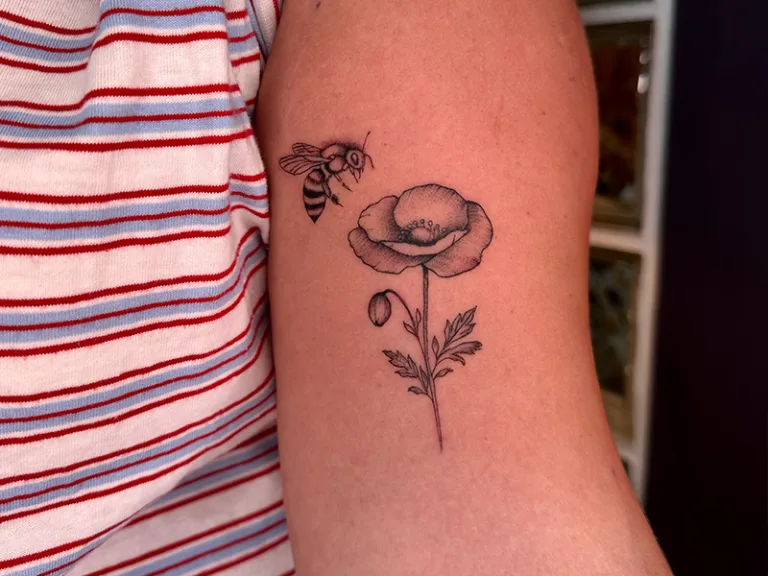
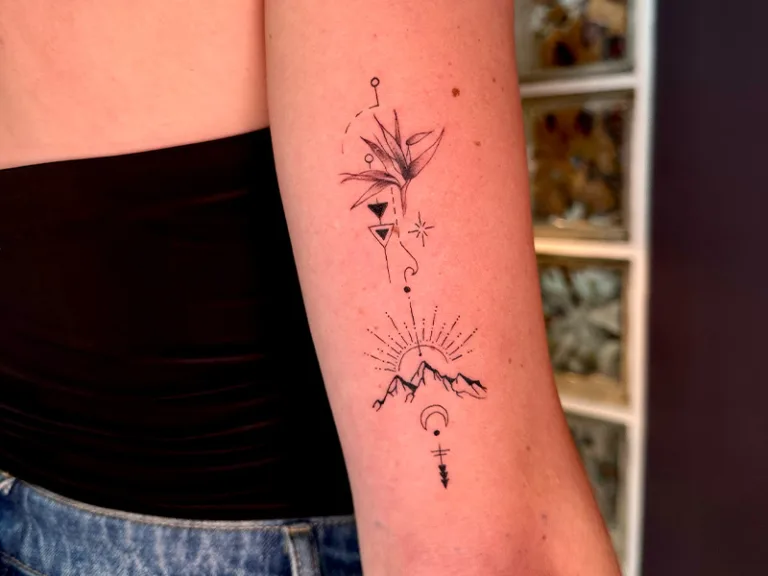
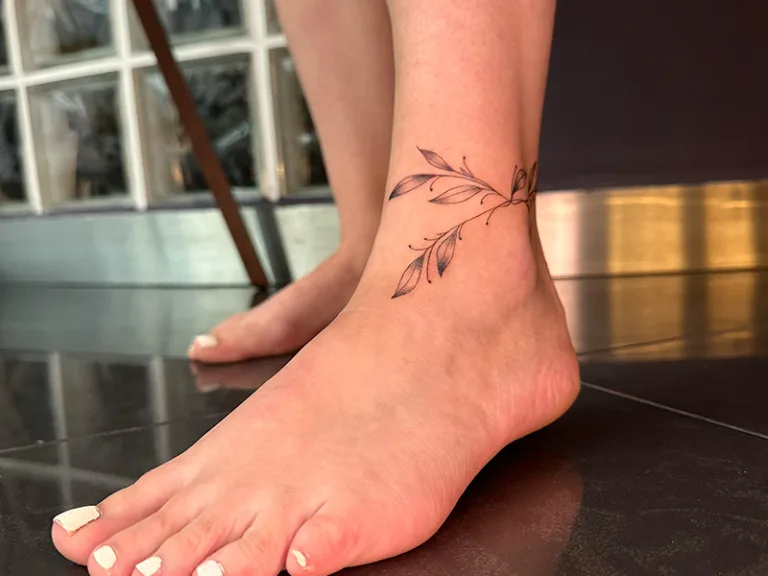
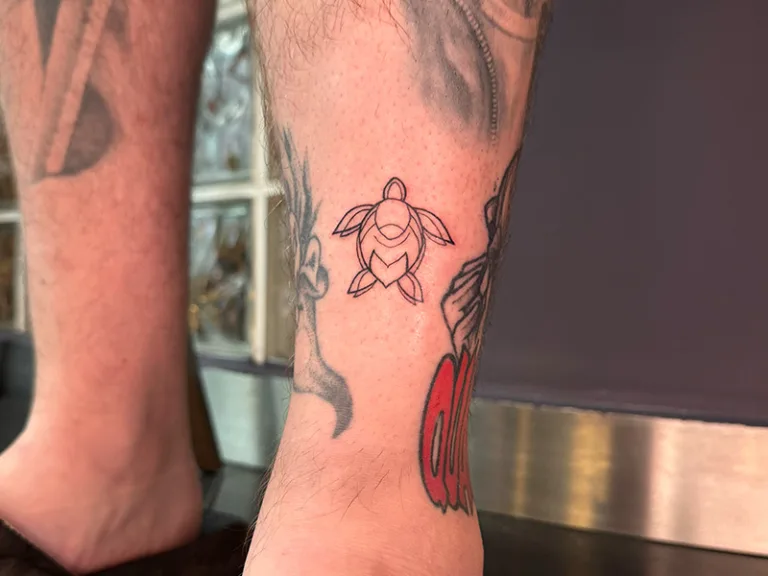
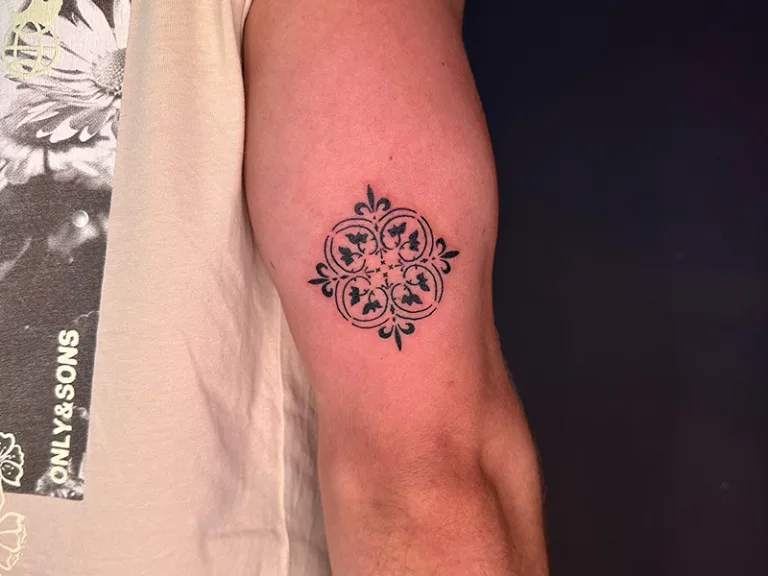
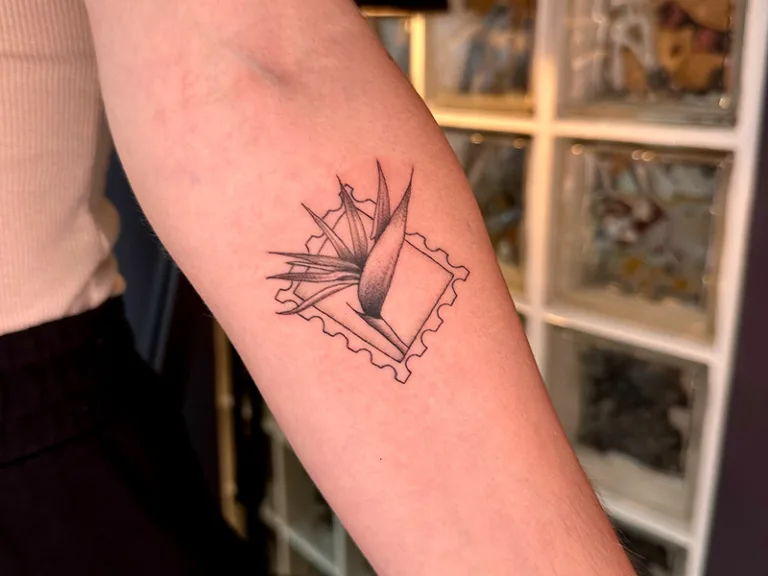
If your plan is a new tattoo over the old one, start here — you don’t need full removal. It’s enough to lighten the existing design so an artist can work over it cleanly, which takes considerably fewer sessions and costs less. Just tell us at your consultation and we’ll set the goal accordingly.
You can have the cover-up done with us as well — Kirill works as both a laser specialist and a tattoo artist, so removal and the new piece can be planned together.
Permanent makeup removal
We also do permanent makeup removal — brows, lips and eyeliner — using the same Hollywood Spectra platform. PMU pigments behave differently from tattoo ink and need their own settings and approach, so we treat this as a separate service with its own protocol.
Who it isn't suitable for
Laser tattoo removal is safe and well tolerated, but there are situations where we’ll postpone treatment:
- Pregnancy and breastfeeding
- Active infection, inflammation or damaged skin over the tattoo
- Sunburn or irritated skin in the treatment area
- Photosensitising medication, including certain acne treatments such as isotretinoin
- Certain skin conditions, epilepsy, or a history of keloid scarring
Fresh tattoos.
We recommend waiting at least 2–6 months after the tattoo was done before starting removal — the skin needs to be fully healed, and a settled tattoo also responds better.
Common questions about tattoo removal
Will it leave a scar?
With correct settings and proper aftercare, scarring is very unlikely — the laser targets pigment, not the surrounding tissue. Where scarring already exists from the original tattoo, the MDF handpiece can help soften and remodel it during the course.
Can I remove just part of a tattoo?
Yes. We can treat a specific section — a name, a date, one element of a larger piece — and leave the rest untouched.
What if I stop halfway through?
Nothing is lost. The tattoo simply stays at the level of fading it has reached, and you can resume later without starting over.
What it costs in Madeira
Let’s be direct, because this is what most people want to know first.
Removing a tattoo costs more than getting one. That’s down to the equipment — professional lasers are expensive, and there’s no way around it. We understand it’s uncomfortable to pay that much, and that it’s the reason many people put the decision off for years.
That’s exactly why we built our pricing around full removal packages: you pay once for unlimited sessions until the result is achieved. However many sessions your tattoo turns out to need, the price doesn’t change — no uncertainty, no growing bill.
| Tattoo size | Single session | Full removal package |
|---|---|---|
| Small | from €150 | € 690 |
| Medium | from €200 | € 990 |
| Large | on request | on request |
Every package includes the MDF skin-renewal handpiece as standard, at no extra cost.
Payment plans are available on full removal packages — you can spread the cost rather than pay everything upfront. Ask us at your consultation.

Ready to start?
Send us a photo of your tattoo on WhatsApp with its approximate size, and we’ll tell you what it will cost. Or come in for a free consultation in Funchal — we’ll look at the tattoo, explain what’s realistic in your case, and give you a firm price with no obligation to book.